
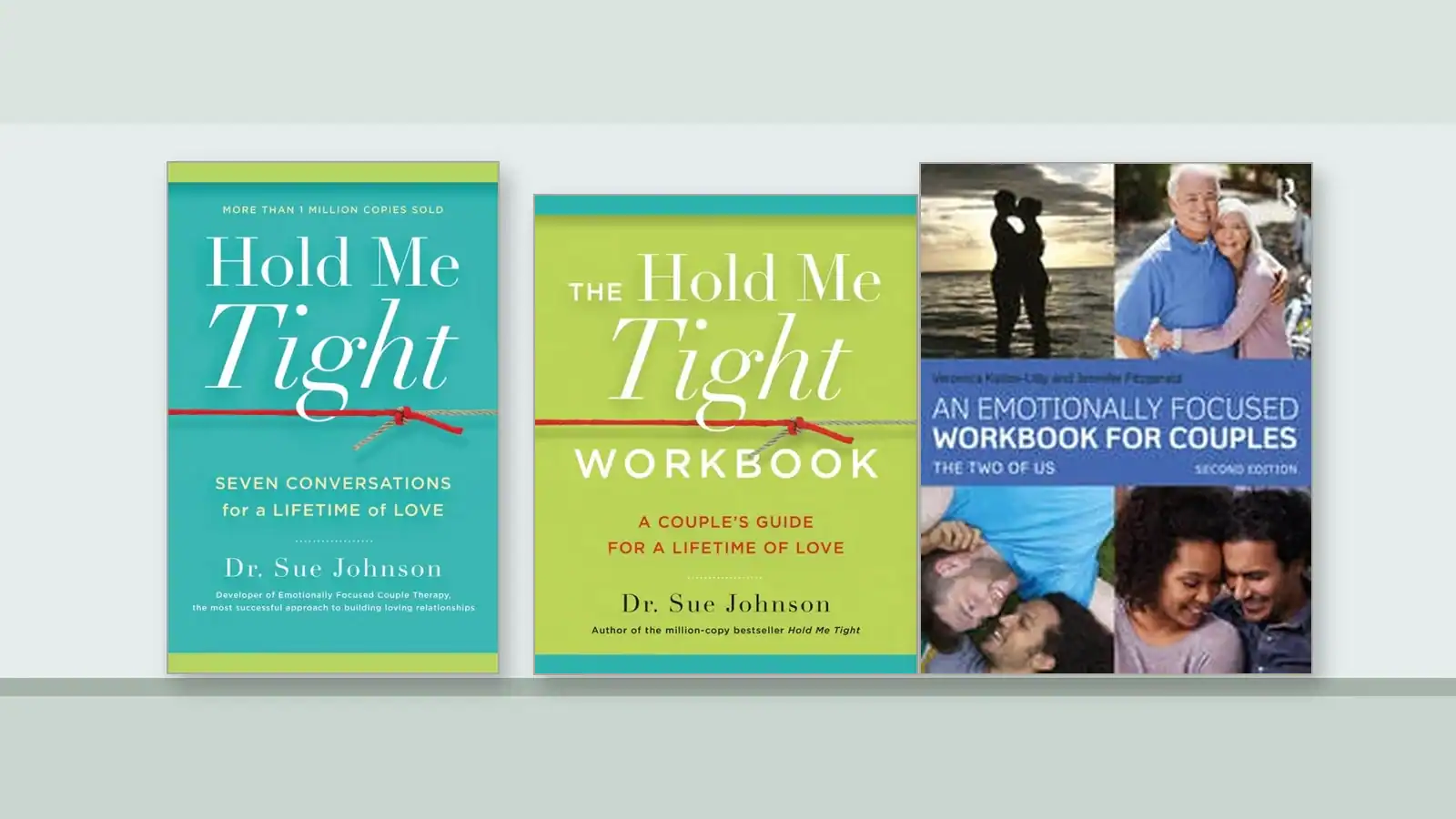
If you want an emotionally focused therapy (EFT) book to read as a couple, start with Dr. Sue Johnson’s Hold Me Tight. It uses stories and seven conversations to help you talk about what happens when you feel far apart. If you’d rather put pen to paper, try The Hold Me Tight Workbook.
“Workbook” can mean two very different things on this shelf. One book may ask what you wish your partner understood. Another may ask how you would guide a client in a therapy session. Here’s how to find the one you meant to buy.
Compare the books
| Book | Who it’s for | What you’ll find |
|---|---|---|
| Hold Me Tight | Couples or one partner starting alone | Stories and seven conversations you can try together. |
| The Hold Me Tight Workbook | Partners who like to write | Questions, exercises and space to work on the seven conversations. |
| Love Sense | A curious reader or couple | An explanation of adult love and why connection matters. |
| Created for Connection | Couples who want a Christian guide | Seven conversations that bring love, attachment and faith together. |
| An Emotionally Focused Workbook for Couples | Couples reading at home or in EFT | A sequence of reading, quiet reflection and shared talks. |
| The Practice of Emotionally Focused Couple Therapy | Couple therapists and students | A guide to the steps a therapist takes in treatment. |
| Becoming an Emotionally Focused Therapist | Therapists in training or practice | Clinical cases and exercises for the person leading a session. |
Check who’s speaking on the first page
Open the book to an exercise and read the first instruction. Who is “you”? If it asks about a time you felt left out or invites you to talk to your partner, it’s written for a couple. If it asks what you would say to a client, the reader is the therapist. The word couple on a cover can describe the people in the room even when a clinician is the one holding the book.
If only one of you wants to read, a chapter with a story is an easy start. When something rings true, offer one thought in your own words. Asking “Does that ever happen to us?” leaves more room for an answer than handing over a chapter as homework.
EFT books you can start at home
Choose between a story, a page to write on, an explanation of love or a guide that includes your faith.
Hold Me Tight
Dr. Sue Johnson
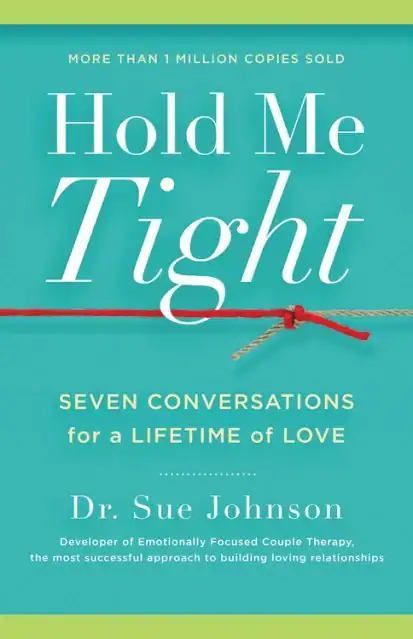
Start here if you want examples of what a conversation can sound like.
Johnson describes the patterns couples can get stuck in. One partner tries harder to get an answer, for instance, while the other pulls away. The seven conversations invite you to talk about what’s underneath that pattern. You can read the stories alone and pick one to discuss together.
The Hold Me Tight Workbook
Dr. Sue Johnson
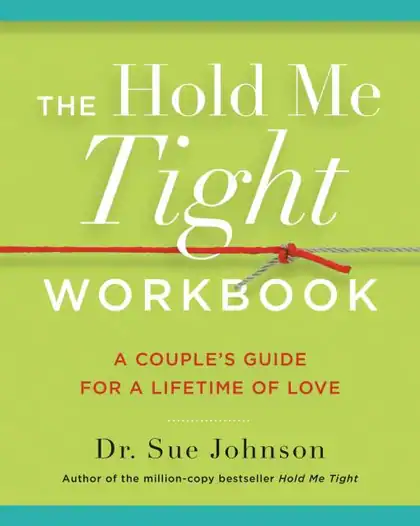
Choose this if you want to do more writing.
This companion to Hold Me Tight turns the seven conversations into things to try. It includes prompts and exercises you can come back to. If you already own the main book and keep asking, “What should we do with this chapter?”, the workbook gives you a place to start.
Love Sense
Dr. Sue Johnson
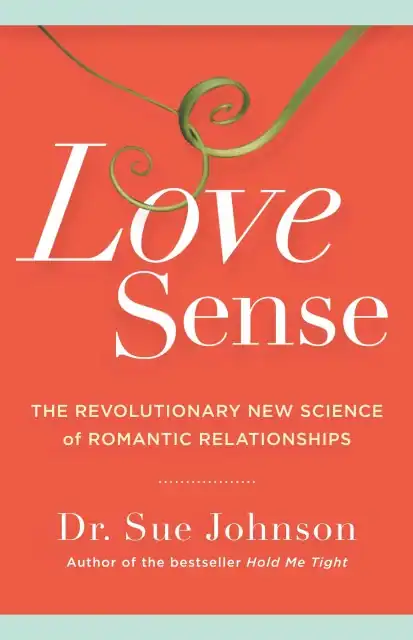
Choose this if you want to understand why closeness matters.
Love Sense looks at adult love through the science of attachment. In everyday terms, that means the bond that lets you turn to someone when you need them. This is a good choice for someone who likes to understand an idea before talking about their own life.
Created for Connection
Dr. Sue Johnson and Kenneth Sanderfer
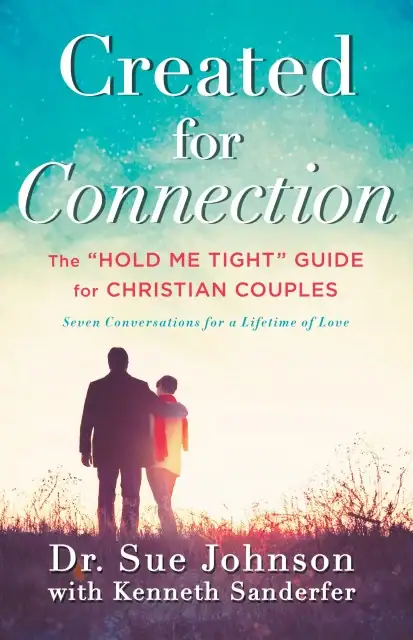
Choose this if you want your Christian faith to be part of the work.
Johnson and Kenneth Sanderfer connect seven talks about love with a Christian understanding of faith. You might choose this version if talking about God feels natural to both of you. Couples who want the same basic conversations in a general relationship book can start with Hold Me Tight.
A couples workbook you can also bring to therapy
If you’re already seeing an EFT therapist, ask which chapter fits the conversation you just had. You may get more from a few pages that match your week than from starting at page one.
An Emotionally Focused Workbook for Couples
Veronica Kallos-Lilly and Jennifer Fitzgerald
For partners who want to read, think on their own and then talk.
In the second edition of An Emotionally Focused Workbook for Couples, subtitled The Two of Us, Veronica Kallos-Lilly and Jennifer Fitzgerald walk readers through repeating arguments, feelings and past hurts. The authors wrote it for couples reading on their own as well as couples working with an EFT therapist. Its three-part format gives both people a turn, even when one likes to think longer before speaking.
Two similar titles written for therapists
These are easy books to order by mistake. Look at the full title when you borrow or buy.
The Practice of Emotionally Focused Couple Therapy
Susan M. Johnson
A guide for the person leading the therapy.
Susan M. Johnson’s third edition, subtitled Creating Connection, explains how a therapist works with a couple during treatment. A student might use it to learn what to do in a session. For a conversation with your own partner, begin with one of the home guides above.
Becoming an Emotionally Focused Therapist
James L. Furrow, Susan M. Johnson and seven coauthors
A practice workbook for clinicians and students.
The second edition uses case examples, practice exercises and review questions to build a therapist’s skills. An easy way to remember the difference is to read the word after “focused.” Workbook for Couples speaks to partners. Therapist in this title tells you whose skills the workbook is built to teach.
Try a question that fits a couples book
Think of a small moment from this week. Maybe you came home quiet after a long day, and your partner thought you were cross with them. Try asking, “When I got quiet, what did you think was going on?” Give them time to answer. Then tell them one thing you wished they’d known.
If talking from a real moment felt easier than filling in a page, choose a story-led book. If you both wanted a minute to put your thoughts in order, try the workbook. You can also take the question to your next session.
Why so many EFT books ask about small moments. In a 2026 study, researchers surveyed one group of 424 Dutch couples and another of 469. In both groups, people who felt their partner was there for them tended to feel that more of their needs were met. A question as small as “Did you want a hand, or someone to sit with you?” can open up that part of the conversation. Read the study of partner support.
Keep reading
Sources and notes
- The International Centre for Excellence in Emotionally Focused Therapy explains EFT
- Authors’ introduction to An Emotionally Focused Workbook for Couples
This site features Dr. Sue Johnson’s books and online programs. The publisher pages identify the editions and intended readers. If it feels unsafe to speak freely with your partner, set shared exercises aside and talk privately with someone you trust.